

HOUSTON– On Nov 3, mutual aid activists won a First Amendment victory in federal court. They challenged the constitutionality of an ordinance restricting the charitable distribution of food in the city. In 2023, the city began issuing tickets to members of the Houston chapter of Food Not Bombs (FNBH), claiming they were in violation of the city's charitable food-sharing ordinance. After fighting a lengthy battle in court a federal judge ruled that the group, which hands out food as an act of protest, is protected from the ordinance on First Amendment grounds.
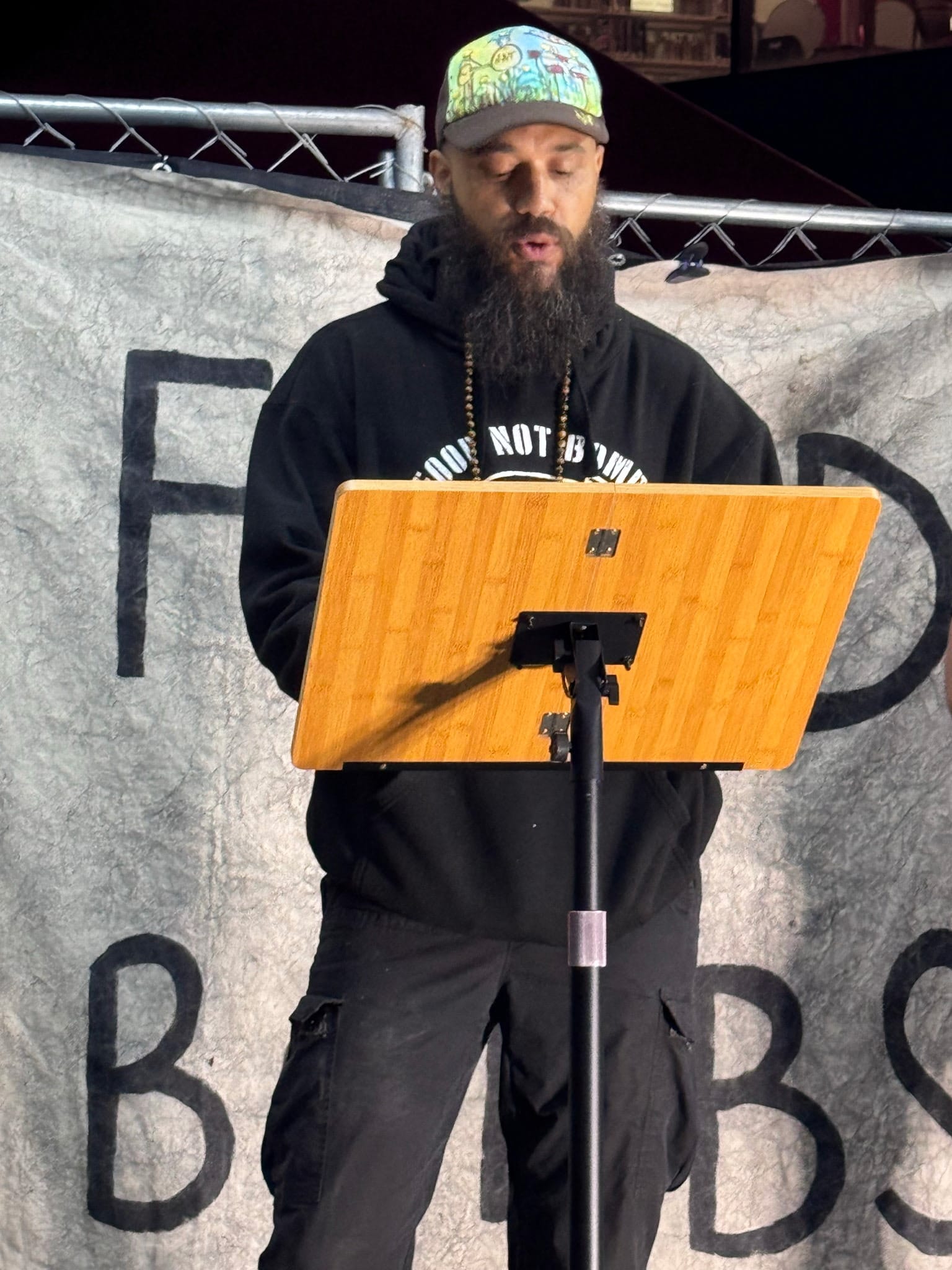
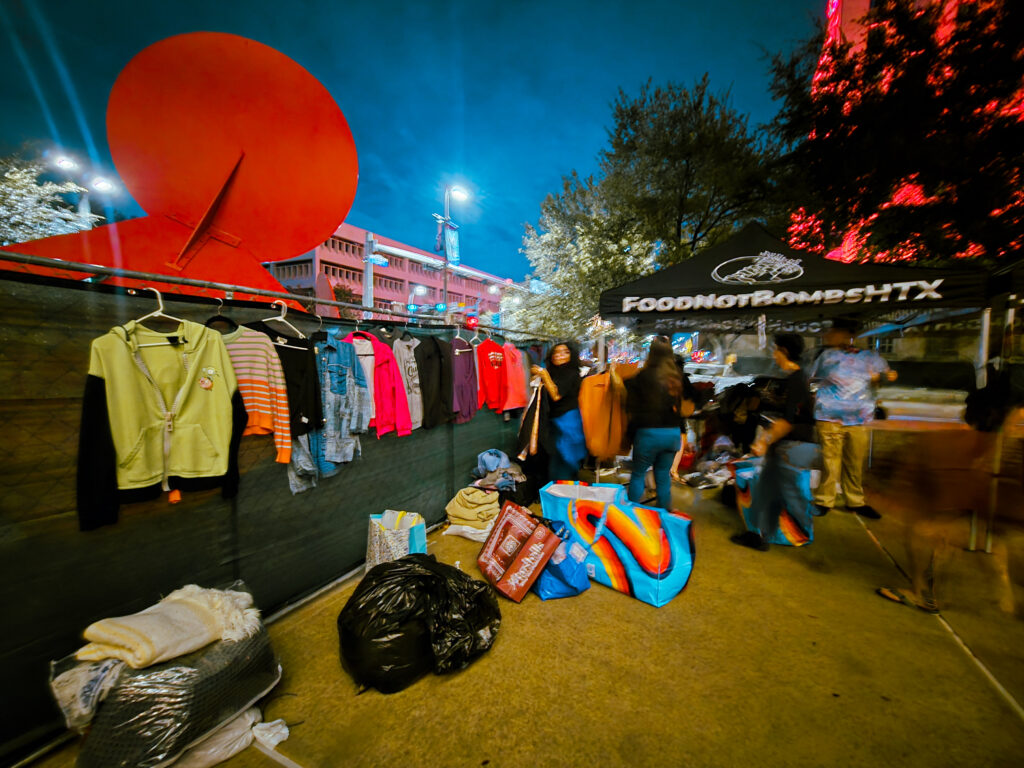
Houston Food Not Bombs serves nearly 1000 people a week with their food-sharing activities, sharing food outside the downtown library four times per day. "The food that we receive is rescued food that would normally be thrown away," said John Locke, volunteer with FNBH. "So essentially, we're throwing away enough food to feed people out here."
"We want to keep showing the failures of the system by tackling [food insecurity] and bringing the community together in protesting that."
The city ordinance, referred to as the "Charitable Food Services Ordinance," was originally passed in 2012 and created a permission requirement for all "food services events," which they defined as any instance in which charitable food services are provided to more than five individuals. According to the Court's order, which outlines the ordinance, the permission scheme "requires that any group or individual seeking to conduct such food service events on public or private property first obtain the written consent of the owner." Despite this ordinance being in place, the city had provided permission for the group to use public sidewalk space outside the central library, located just across the street from city hall.
In 2023, the city withdrew their permission to use that space and attempted to push the group's activities to a less visible location outside Houston's main business district, away from a main traffic hub. The group refused to move, and its volunteers began receiving those citations for violating the ordinance. They have received over 100 citations since 2023.
The city cited public and food safety concerns as the driver behind their decision to enforce the ordinance. Locke believes that the real reason is far deeper than policy or statutes. "They don't want homelessness to be visible and to show the failures of their system. They want the homeless community to be tucked off somewhere hidden where no one that's visiting the city can see," he said. "I think that the city and the government takes a bad approach on homelessness where they just try to put a Band-Aid, or cover up an eyesore as opposed to actually solving the system that creates this problem."
"There's a lot of realities that the city and the government tries to hide, but it's right there in our face," Locke said, referring to extreme poverty and conditions of unaffordability that many Houstonians face. "We want to keep showing the failures of the system by tackling [food insecurity] and bringing the community together in protesting that." This refusal to move on the part of the group, citing their First Amendment right to protest, became the crux of a lawsuit filed against the city in 2024.
"Our goal is for people in all the communities around the city to be able to share food."
Ultimately, the Court agreed. In a Nov 3 ruling, U.S. District Judge for the Southern District of Texas Andrew S. Hanen concluded that "the Ordinance is an unconstitutional restriction on [FNBH]'s expressive conduct as applied." There is precedent for this ruling: in 2018, the Eleventh Circuit ruled in much the same way against the City of Fort Lauderdale, concluding that the activities of the Fort Lauderdale Food Not Bombs chapter could reasonably seen as conveying a message to observers. Essentially, the public food-sharing activities of the group, along with the presence of banners, literature, and t-shirts with slogans projected a message to passersby, thus making it a First Amendment-protected activity.
"The federal judge's order confirmed what we've known all along, which is [that] sharing food with our neighbors should not be a crime" said Randy Hiroshige, Staff Attorney with the Texas Civil Rights Project, who represented the group in court. "We've been proud to stand up alongside Food Not Bombs Houston in this fight as they continued to protest and share food in the face of repression and criminalization."
Locke stresses that this is just the beginning. According to him, the Court did not strike down the entire charitable feeding ordinance, nor did it say that cities cannot regulate public spaces or food safety. Likewise, the ruling does not mean that anyone can feed anywhere without reasonable rules, and it did not resolve every constitutional theory put forward in the lawsuit. The Court has given both parties 30 days to negotiate a permanent injunction that would address concerns over minimizing litter and potential public nuisances.
But it's a start, he says, and the group is resolved to fighting the ordinance on behalf of anyone wanting to share food in the city. "Our goal is for people in all the communities around the city to be able to share food," he said.
"To our understanding, this ordinance is wildly unpopular," Hiroshige said. He hopes that this victory is a lesson to the city that this ordinance and others like it throughout Texas shouldn't even stay on the books. The ordinances are part of what Hiroshige calls a broader effort of cities to further marginalize the homeless and prevent them from receiving mutual aid.
"The federal judge's order confirmed what we've known all along, which is [that] sharing food with our neighbors should not be a crime."
"What Food Not Bombs Houston has especially shown to the city of Houston is that there's an alternative path here," Hiroshige said. "That mutual aid looks like treating unhoused people as our neighbors and sharing that food in public really shows what that alternative path to the city's cruelty and criminalization looks like."
The impact of this ordinance goes beyond the people receiving food or the message being spread. Locke believes that the ordinance has discouraged others from engaging in similar mutual aid activity. "A lot of businesses stopped sharing food after this ordinance because they're scared of getting a $2500 fine," Locke said. "We wanted to push this [lawsuit]...to apply it to all Houstonians, anybody trying to share food as active protest, and have a right to help the community. People should not have to be wealthy, housed, or politically connected to deserve dignity."
To learn more about Houston Food Not Bombs, you can visit their website here.

Editorial note, 18 Nov 2026, 4:50PM CST: This article was updated to include comment from Randy Hiroshige, Staff Attorney with Texas Civil Rights Project.
