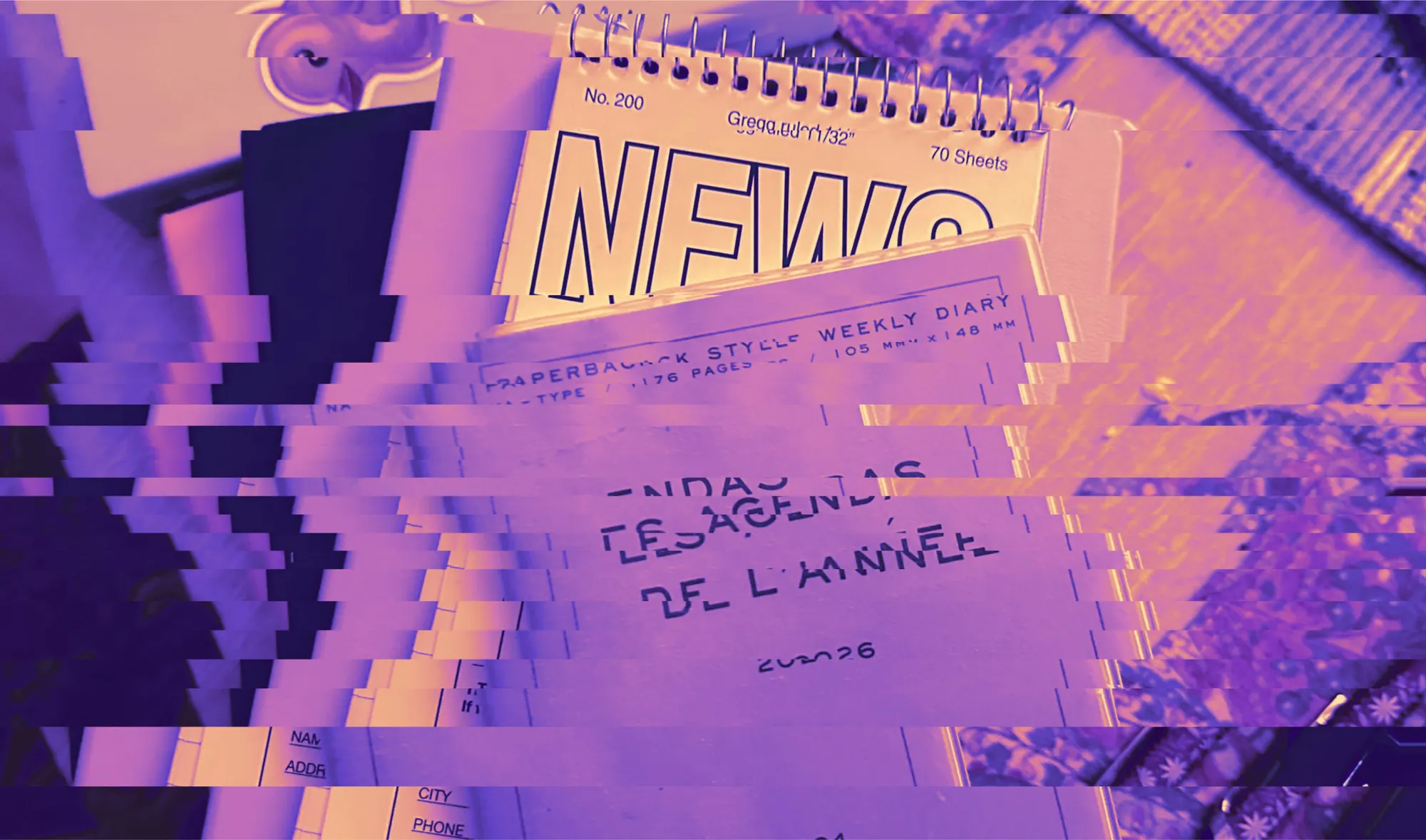

As you may have read a few weeks back, I've been thinking a lot about my personal writing practice this year, up to and including the various ways that I choose to record and preserve the comings and goings of...well, me.
Best thing I ever did for myself was begin a regular handwritten diary practice in 2023. Those books are mine to view, and sit patiently on the shelf. For whatever reason I began my books numerically, but starting with "Vol II," however. I can't, for the life of me, remember if a "Vol I" even exists
— Mel Buer (@melbuer.bsky.social) 2026-10-28T15:28:46.678Z
Back in 2020, as the world was roiling from the relentless crush of pandemic death announcements, lockdowns, and mass layoffs, there were numerous posts on Twitter that stressed the importance of writing shit down. We were living through a global crisis the likes of which none of us had really ever seen, and it became pretty clear pretty quickly (in my mind, at least) that we should preserve, in some way, the strangeness and terror of such a crisis. That practice has become only more important as we have marched headlong into year after year of important historical and personal happenings over the last 6 years.
There are many archivists out there that will tell you that it's not enough to simply save the bits and bobs, record the happenings, keep the letters, etc., but you must also become a curator of these materials. How do you store and preserve them, yes, but also–what story do they tell? How can you, or I, or someone 50 years from now, make sense of what they're looking at?
One of those odd things that stuck with me as I worked my way through my first semester of library school (RIP my archival career, I ran out of loans when the limits changed, those rat MAGA bastards) was a bit of an offhand comment made by a professor in one of my foundational courses: when collections come into a repository, archival professionals will often work to preserve the organizational system they were originally in.
The original owner of the collection (you, me, your parents, an author, insert person here) will have had a system for organizing the papers and memories that make up the archive. There's value in preserving that system, because it offers insight into the thinking of the human being or beings who created it.
At some point in the past, I began to develop my own system of curating my own personal archive. Most days it looks like utter nonsense––just a stack of papers dumped in a drawer and forgotten about––but at least twice a year (these days, at least; it used to happen maybe yearly, if that) I take a week and organize my writing, research, photography and other pieces of my intellectual collection, if you will, into the system I have developed. For funsies, I thought I would write about that system for one of this week's paid posts. Check her out:
Join me as I dissect my personal archive. Subscribe as a paid member today.
